
Chronic Kidney Disease for Primary Care:
Prescriber foundations

Course overview
A focused, action-oriented course for busy clinicians who want clear guidance on what to do in everyday practice. This course delivers step-by-step, evidence-based prescribing and medicines optimisation for CKD from prevention through referral, with an emphasis on reducing cardiovascular risk, slowing kidney decline, and managing complications safely. You’ll leave with practical treatment pathways, prescribing priorities, and clinical next steps you can apply immediately.
-
Modules: 6
-
Short modules: 5-15 minutes each
-
Audience: Primary Care
-
Study time: 1 hour
-
Quiz and Certificate
Write your awesome label here.
Part of our Chronic Kidney Disease for Primary Care series
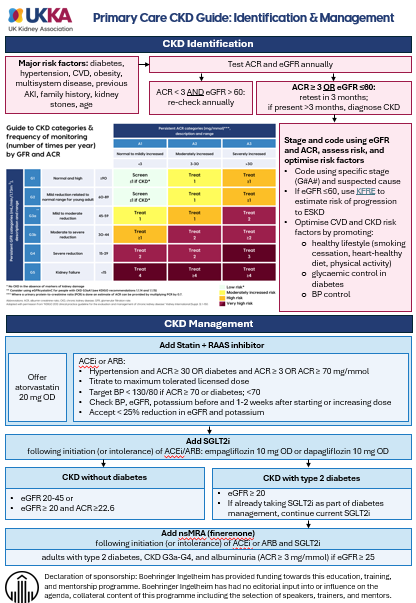
Quick reference guide
About the course
Chronic kidney disease (CKD) affects about 1 in 10 UK adults. It is a lifelong condition with wide-ranging consequences, including substantially increased risks of cardiovascular events, progression to kidney failure, and all-cause mortality. Preventing CKD, detecting it early, and managing it well helps people live longer, healthier lives while reducing long-term economic impact.
Most people living with or at risk of CKD will never need to be referred to secondary care. Primary care prescribers play a central role in reducing the cardiovascular disease and kidney failure risk with the appropriate use of evidence-based, cost-effective medication.
This abridged course provides a practical foundation for identifying and managing CKD in primary care. It centres on medicines optimisation, but covers the full journey from prevention to referral. This course is designed to be completed in about an hour. It covers everything you need to identify, manage, and support people with CKD in primary care quickly and efficiently.If you want to go deeper to understand the mechanisms behind CKD, the evidence base for the recommendations, and the pathophysiology that explains why we manage it the way we do, a significantly more in-depth course is available here.
Most people living with or at risk of CKD will never need to be referred to secondary care. Primary care prescribers play a central role in reducing the cardiovascular disease and kidney failure risk with the appropriate use of evidence-based, cost-effective medication.
This abridged course provides a practical foundation for identifying and managing CKD in primary care. It centres on medicines optimisation, but covers the full journey from prevention to referral. This course is designed to be completed in about an hour. It covers everything you need to identify, manage, and support people with CKD in primary care quickly and efficiently.If you want to go deeper to understand the mechanisms behind CKD, the evidence base for the recommendations, and the pathophysiology that explains why we manage it the way we do, a significantly more in-depth course is available here.
Learning outcomes
You'll learn how to:
The Authors